Four ways the Room Gap shows up.

The Room Gap is the difference between the room-level decision a customer is making and the product-level experience the website provides. It shows up in four places a retailer already measures.

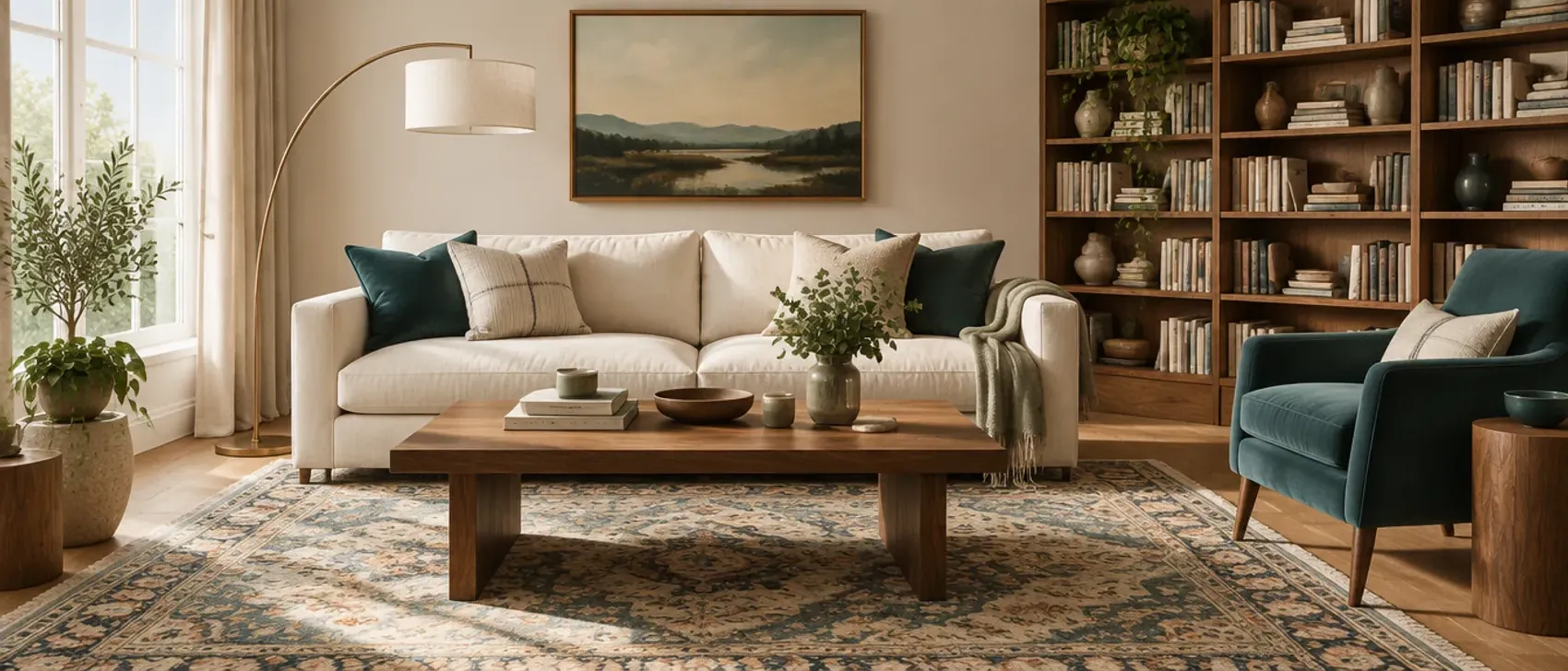
A complete living room: cream sofa with layered cushions, walnut coffee table on a patterned rug, arc floor lamp, filled bookshelf and a teal accent chair

01

Shoppers hesitate and abandon

A shopper who cannot picture a piece in their own room does not buy it, they bookmark it. The product page has answered every question except the one that decides the purchase.

Showing the piece standing in the room, at the size the measurements say it is, moves that decision from imagination to evidence.

02

Single-item orders

On a showroom floor, a sofa is the start of a conversation about the rug, the lighting and the side table. Online, the cart takes one line and the conversation never happens.

Completing the room around the piece a shopper chose puts that conversation back, from stock you already hold, into one order.

03

Inventory shoppers never find

Depth of catalog only pays if shoppers reach it. Search and category pages reward the pieces a customer already knows to look for, and leave the rest unseen.

Pieces surfaced because they suit the room in front of the shopper reach inventory that browsing never would.

04

Uncertainty becomes returns

Furniture returns are expensive in a way most categories are not: freight, handling, and a piece that may not resell at full margin.

A shopper who has already seen the piece in their own room, at real scale against a measured floor, is deciding with far less left to chance.

See which of the four is costing you most.

Thirty minutes, against products your team already sells.

Book a demo