
Product
3D models from the product photography you already have.
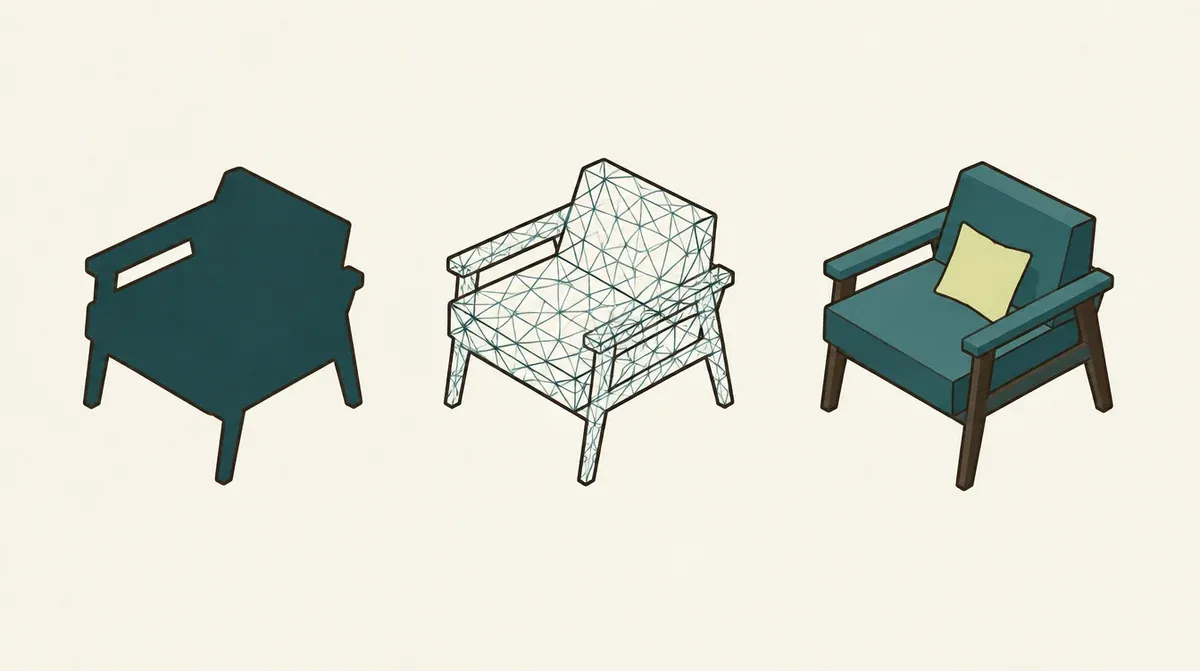
A catalog photograph is enough to produce a model of the piece, scaled to the dimensions already on its record.
What it is
The usual reason a retailer cannot offer room visualization is asset cost. Every product needs a model, models are commissioned one at a time, and a catalog that turns over every season never finishes.
3D generation removes that as the blocking step. The input is photography already published on your product pages, and the output is a model scaled to dimensions already on the record.
See it on a real catalog.
Thirty minutes, against products the team already sells.
What it needs from you
- One clear product image per piece.
- Width, height and depth on the product record, since scale comes from data rather than from the image.
What it does not do
- A model is only as good as the photograph and the dimensions behind it.
- A piece with no dimensions can be modelled but not placed to scale.
Next in the system
Catalog CreationProducts arrive from the store you already run, or are created directly in Studio, carrying the attributes a room depends on.Room VisualizationThe shopper photographs the room. Arbuz returns that photograph with your pieces in it, at the size the room's measurements say they are.Room CompletionA shopper who has chosen a sofa has not finished furnishing a living room. Room completion answers the rest of that question, from the catalog you already sell.