Understand the room.
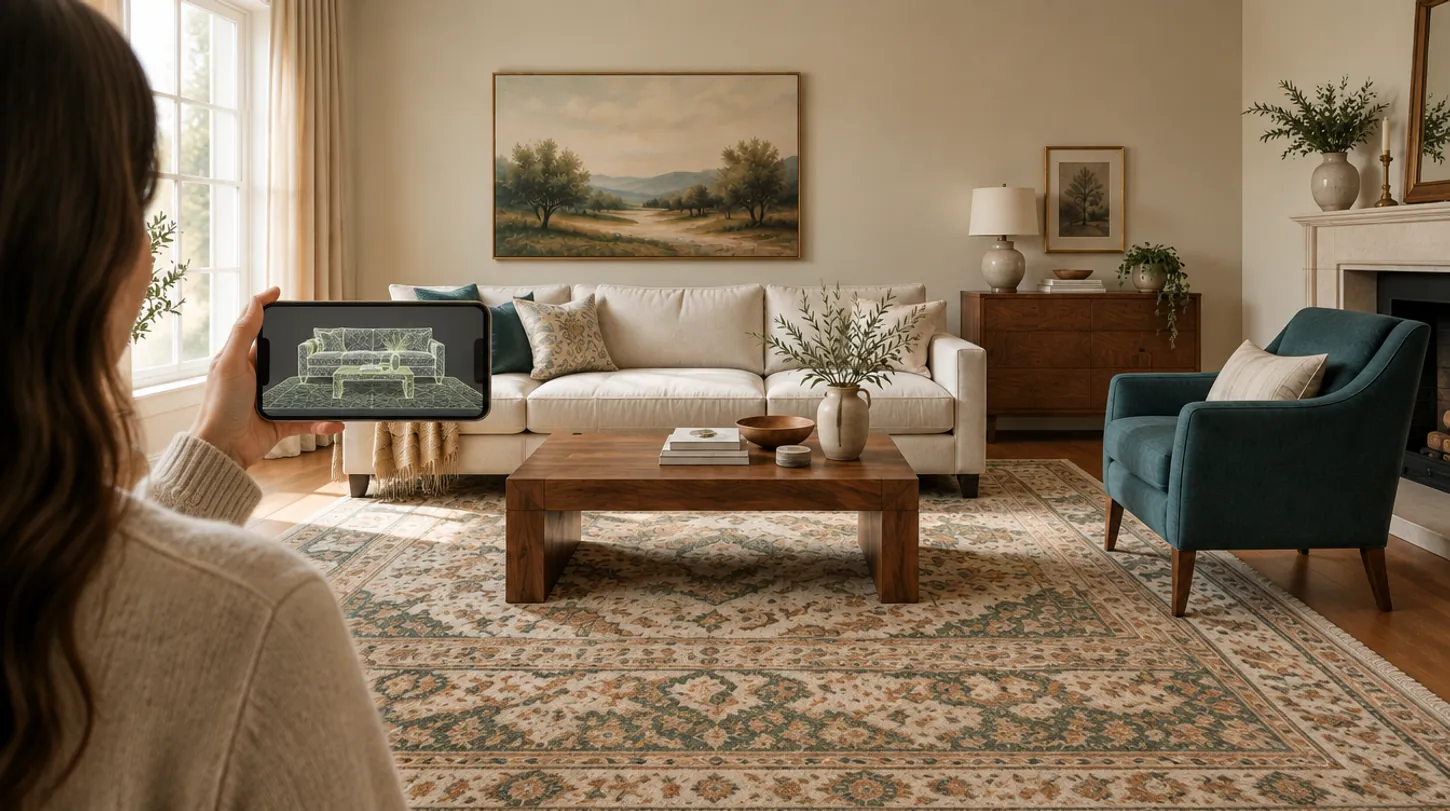
Start with the room your customer actually wants to furnish. Capture its layout, dimensions, and spatial context to give every next decision a better starting point.
Explore Room Scanning ↗
LIVING ROOM / EXAMPLEFrom preparing your catalog to helping a customer finish their room.
Five connected products. One Room Commerce Engine for furniture and home décor.
Meet the products ↓
LIVING ROOM / EXAMPLEYour products, seen as part of their life.
The catalog supplies the products. The room gives them context. The shopping journey gives your team something to learn from.
Bring product identities, variants, prices, and source information into a connected catalog.
This is the story of the system. In practice, catalog preparation and room capture meet at visualization, while agents support work across the journey.
Start with the room your customer actually wants to furnish. Capture its layout, dimensions, and spatial context to give every next decision a better starting point.
Explore Room Scanning ↗
LIVING ROOM / EXAMPLEHelp shoppers see your furniture and home décor in their own space. Bring their chosen pieces together, so they can explore the room before deciding what to buy.
Explore Visualization ↗
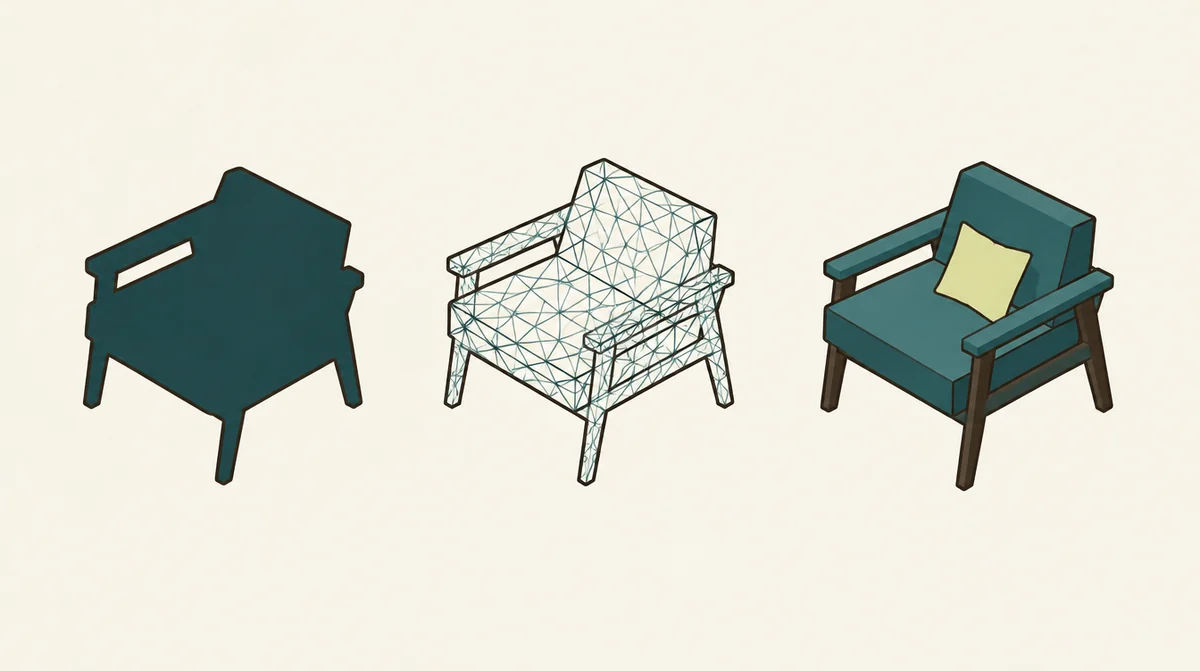
LIVING ROOM / EXAMPLETurn product images and catalog information into 3D assets for room commerce. Prepare models that your team can review and use across the Arbuz experience.
Explore 3D Model Generation ↗
Product images, dimensions, materials, and variant details form the source.
Import, organize, enrich, and classify your furniture and home décor catalog. Give each product the context it needs to take part in a shoppable room.
Explore Catalog Intelligence ↗Four areas of work, each with a defined scope, a fixed set of tools, and a boundary it will not cross. Every result is scoped to your own catalog and waits for your team to approve it.
Explore AI Agents ↗Prepares answers to common product questions, suggests complementary pieces from your catalog, and drafts quotes and customer follow-ups for your team to send.
Organize product information, prepare assets, and see what needs attention.
Connect the shopper’s selected product to pieces that make sense in their space.
Review journey activity and connected commerce data. Use evidence to decide what to improve.
Thirty minutes, against the products and rooms your customers already shop.