
The ROI of AI Room Completion: Engineering a 200% Ticket Lift
July 6, 2026 · 4 min read
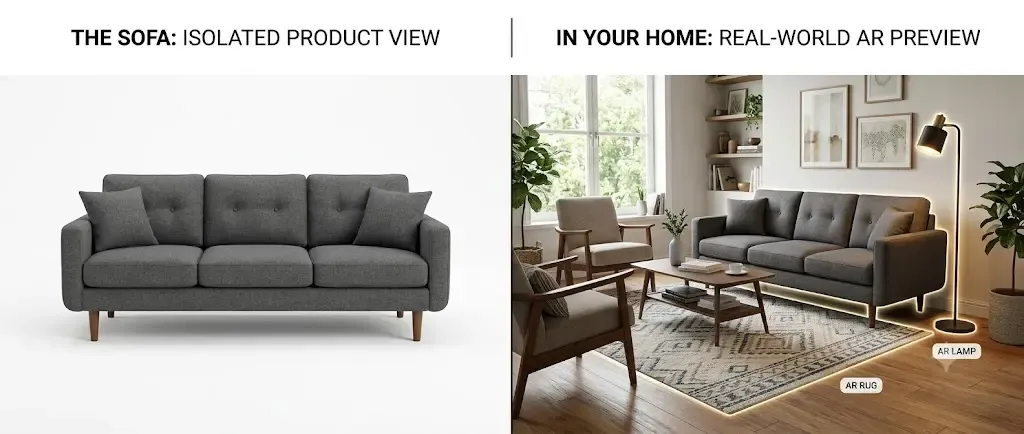
Digital teams in furniture e-commerce dedicate significant resources to securing marginal improvements in their conversion rates. While getting a shopper to check out is always a win, focusing solely on securing the sale hides a much larger missed opportunity: the size of the transaction itself. The vast majority of those online orders are for a single item.
Physical showrooms naturally drive larger orders because they merchandise by the room. A shopper might walk in looking for a sofa, but because they see it styled alongside a rug and a coffee table, the upsell happens organically. Online, that spatial context disappears. The digital experience forces shoppers to evaluate items in isolation, which inevitably leads to single-item purchases.
For a decade, retailers have tried to fix this with "Frequently Bought Together" carousels. However, suggesting a rug next to a sofa in a basic row of product thumbnails fails to show a buyer how those pieces will actually look in their own space. That missing visual context is exactly why physical stores generate significantly more revenue per customer.
Why Carts Stay Small
Buying high-ticket furniture carries a lot of financial and aesthetic risk. Today’s digital orders stay small because buyers run into a few core roadblocks:
- Spatial ambiguity — a text description like "84 inches wide" does not help a buyer understand how a piece will actually scale in their living room.
- Fear of clashing — customers worry their expensive new furniture will clash with their current room aesthetic.
- Decision fatigue — opening fifteen browser tabs to manually match dimensions and styles is exhausting. When buyers get overwhelmed, they default to the safest choice. Usually, that means buying only the primary piece they originally searched for.
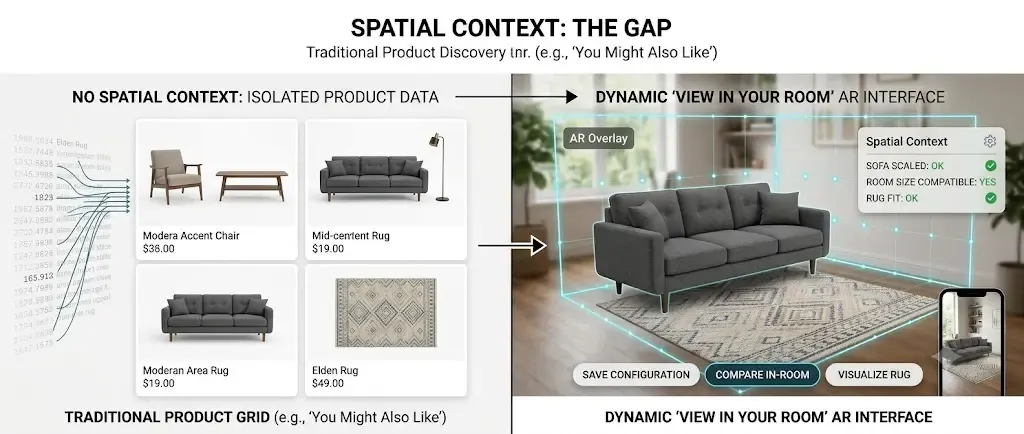
The Psychology of Room Completion
Consumers do not conceptualize their homes as a collection of disjointed SKUs — they buy spaces.
AI Room Completion takes the anchor product and projects it directly into the shopper's physical room while seamlessly adding complementary, in-stock accessories from a retailer's catalog. This shifts the buyer's mindset from analytically wondering if a piece will fit to emotionally connecting with how the entire room looks. Seeing everything together in their own home removes the hesitation that normally stops them from adding more items to the order.
The Business Case: The Math Behind the Margin
Selling full rooms completely changes the economics of an online store. Consider a standard transaction compared to a completed room:
- Standard order: a single sofa at $1,200 — total basket, $1,200.
- Completed room: that same sofa plus a $400 rug, a $350 table, and a $250 lamp — total basket, $2,200.
This specific example shows an 83% lift in average order value, though retailers can see up to a 200% ticket lift depending on the accessories added. It boosts top-line revenue and significantly improves gross margins, as add-on items like lighting and decor carry much higher profitability than heavy upholstery. Earning more revenue per visitor also radically improves customer acquisition cost efficiency, providing the financial leverage needed to outbid competitors on ad spend.
Fixing the Implementation Bottleneck
Adopting new technology always comes down to how hard it is to actually implement. Bringing visual tech into the furniture industry has historically created a massive bottleneck. Retailers often have to build custom apps that shoppers rarely download, or they pay for expensive site rebuilds to support heavy 3D viewers. These traditional methods drain developer resources and slow down page load speeds, which actively hurts existing conversion rates.
Arbuz was built to bypass this exact hurdle. The platform deploys through a single script tag with zero impact on site speed. It introduces live AR mapping and real-time inventory bundling directly into an existing website without requiring an engineering overhaul.
By removing the friction that keeps online orders small, retailers can unlock the margin hidden within their own catalogs. Shoppers already want to buy completed spaces. They just need the tools to finally see them.